Saturday, October 18, 2014
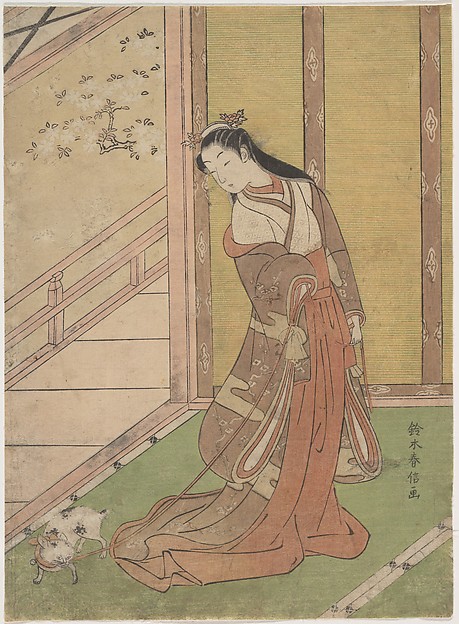
Images of Women in Edo Period
Here are some gathered images which can be used as reference towards women in the Edo Period. For explanation, refer to the last post, http://lauraatnua.blogspot.co.uk/2014/10/female-clothing-in-edo-period-japan.html
Female Clothing in Edo Period Japan
When one thinks of clothing in Japan, what they generally
think of is the Kimono. Kimono generally are the wrap-around clothes that a lot
of people see when looking at traditional Japanese art. However, there is a lot
of structure and social rules behind the kimono. One of the first rules is that
the left side of the kimono must always go over the right (when looking down at
yourself). Kimono are also square cut and have rectangular sleeves. The sleeves
vary depending on multiple things, such as the age, sex, class or occupation of
the person as well as the current occasion or season. There are also multiple
layers that are usually worn. An under kimono, usually made of plain and easy
to clean fabric, goes on first over which the kimono goes. Oftentimes in warm
weather, a small collar covers the spot usually covered by the under-kimono.
This also allows elaborate patterns to be displayed there. Clothes are never
hooked or tied, instead being tied with himo,
which are straps sewn with folded fabric. Over the himo goes the obi and the
obi sash. The obi also varies extremely based on age and status. The obi’s bow always goes at the back of the
person. (1)
Kimono in the Edo period were generally used as a
representation of social status in the higher classes and whilst lower classes
were able to wear them, there were restrictions in place. After wealthy
craftsmen and merchants began to show their wealth by buying and wearing gaudy
and expensive clothing, certain fabrics, techniques and colours were forbidden
for use by the lower classes due to the fear that it would upset the rigid
social structure that was in place at the time. This encouraged the craftsmen
to create new techniques and eventually change what was in-style, switching
from bright colours to more subdued tones, as well as often toeing the line by
using colours such as red (which was forbidden) in places such as linings,
which were not restricted. (2)
For women, a cylindrical shape is essential, and there will
often be pads worn under the clothes to maintain this shape. The kimono’s back
is often low-slung, showing a lot of the back. Showing the front is frowned
upon. Many hime, or high-born women
would wear a red or purple brocade, with an outer kimono that trails along the
ground which is highly embroidered in gold, going over the obi.
For footwear, sandals are almost always worn unless in rainy
weather. For when it is cold, tabi,
or split-toe sock are worn, which are designed to be worn with the sandals.
Sandals are always taken off when entering a place, so the tabi also serve a function as slippers. When it rains, geta are worn, which are like clogs.
They have platforms on the bottom to keep the wearer away from mud and puddles,
but are otherwise similar to their sandals with split-toe straps. (3)
Hairstyles for women also varied greatly. In the Edo period
alone the hairstyles of women grew very extravagant, adorned with many combs,
hair-sticks and ribbons, being waxed and tied into elaborate patterns. In the
early Edo period, shimada mage, the
hair is looped back and slicked with wax, with a comb inserted in the back.
This style evolved and grew, with some having the comb positioned front-facing,
including several hair-sticks. There is also another style called the yoko-hyogo, which emerged in the late
Edo period. In this style, a large volume of hair is placed on top, with the
sides waxed to spread out, representing wings. This style is adorned with many
combs, sticks and ribbons. The hair is also shaved at the temples and forehead
to create a widow’s peak. (4)
Bibliography:
Friday, October 17, 2014
Story Synopsis
Since being given the basis of the story The Tinderbox, we were also asked to provide a brief synopsis to show our understanding of the story before we begin development of our characters and environments. I think it would also be a good idea to transpose this story into the setting I have been provided, which is Edo Japan.
Synopsis:
A soldier is returning home when he encounters an old witch. This old witch asks him to go into the depths of a tree and fetch her tinderbox, whilst warning him of the dogs that he must take care of in order to take their gold. He was told that he could keep the gold so long as he gave the tinderbox back to her.
So he went into the tree, dealing with the dogs and taking as much copper, silver and gold as he could. When he found the tinderbox, he left the tree and was about to give the tinderbox to the witch before he was overcome by his curiosity as to what she wanted with it. When she refused to tell him, he cut off her head and kept the tinderbox for himself.
He lived for a while in relative comfort due to his acquired riches. At this point he learns of the princess, who is kept in secret because she was said to be marrying a common soldier, which the king would have nothing of. He pondered upon this, whilst he ran out of money and returned to what he once was - a poor soldier. He finally decided to find out what the tinderbox did, and struck it.
The three dogs he encountered earlier came to him, from which they asked what he bid of them. He first asked for more gold, before asking the dogs to bring him the princess. At the end of the night, she left speaking of strange dreams. This aroused suspicion from the Queen, who decided to use various methods to find out who was stealing her precious princess.
First they tried to mark his door with a chalk cross, but he outwitted them by crossing all the doors in town. Then they filled a bag with flour and tied it to the princess, which successfully led the King and Queen to the soldier. He was taken to be hanged in the morning.
However, the soldier asked someone to fetch his tinderbox, and on the morning when he was to be hanged, he used it, telling the dogs to 'let him not be hanged'. The dogs let rip a massacre, killing both the King and Queen and all the judges. The soldiers and people were so afraid they decided to make the soldier the new King. In the end, the princess did marry the common soldier, even if the King tried to prevent it.
Transposing the Story:
In Edo Japan, maintaining class structure was vital, so the idea of a mere soldier marrying into a ruling family was unheard of. Instead of the King being a King, I think he should be a Daimyo, who is a figure that ruled under the Shogun. Most Daimyo only ruled over a small area of land, but some had truly great ranges to their rule.
I would like to think that, in this story, the soldier would be a Rōnin, which is the term for a samurai with no master. In tradition, a Samurai is supposed to commit seppuku if their master is to die, so that they can join them in death. However, in the Edo Period, there was a large increase in Rōnin due to the immense amount of restrictions and confiscations of fiefs. Some Rōnin would hire themselves out as mercenaries, whilst others would turn to a life of crime. I believed a role as Rōnin on the criminal side would have suited the soldier as he seems to not have much of a moral compass, serving no master but his own.
The dogs, I decided, would not be actual dogs as the animal, but three individuals of the lowest class. In the Edo Period, there was a group of people outside the four main classes, whose professions broke taboos of Buddhism. These groups were known as the Eta, which served as butchers, tanners and undertakers, and the Hinin, which included town guards, street cleaners and executioners. Not all of the outsiders were included in this category, however, with occupations such as beggars and prostitutes also falling into this lowest class. Hinin were only allowed into special parts of the city, whilst Eta lived in a totally separate place altogether. The 'dogs' would be beggars, so not part of either Eta or Hinin, but complete outsiders. The money they earned from begging would be split into the coins that each 'dog' kept an eye on, but they would also steal money from each passerby who would stop to pity them, in spite for being in a higher class than them.
The only characters I have trouble pinning down are the Witch, Princess and Queen. There are a lot of sub-classes within each social class, so I would have to consider and do more research into these social structures to pin down a role for each.
Synopsis:
A soldier is returning home when he encounters an old witch. This old witch asks him to go into the depths of a tree and fetch her tinderbox, whilst warning him of the dogs that he must take care of in order to take their gold. He was told that he could keep the gold so long as he gave the tinderbox back to her.
So he went into the tree, dealing with the dogs and taking as much copper, silver and gold as he could. When he found the tinderbox, he left the tree and was about to give the tinderbox to the witch before he was overcome by his curiosity as to what she wanted with it. When she refused to tell him, he cut off her head and kept the tinderbox for himself.
He lived for a while in relative comfort due to his acquired riches. At this point he learns of the princess, who is kept in secret because she was said to be marrying a common soldier, which the king would have nothing of. He pondered upon this, whilst he ran out of money and returned to what he once was - a poor soldier. He finally decided to find out what the tinderbox did, and struck it.
The three dogs he encountered earlier came to him, from which they asked what he bid of them. He first asked for more gold, before asking the dogs to bring him the princess. At the end of the night, she left speaking of strange dreams. This aroused suspicion from the Queen, who decided to use various methods to find out who was stealing her precious princess.
First they tried to mark his door with a chalk cross, but he outwitted them by crossing all the doors in town. Then they filled a bag with flour and tied it to the princess, which successfully led the King and Queen to the soldier. He was taken to be hanged in the morning.
However, the soldier asked someone to fetch his tinderbox, and on the morning when he was to be hanged, he used it, telling the dogs to 'let him not be hanged'. The dogs let rip a massacre, killing both the King and Queen and all the judges. The soldiers and people were so afraid they decided to make the soldier the new King. In the end, the princess did marry the common soldier, even if the King tried to prevent it.
Transposing the Story:
In Edo Japan, maintaining class structure was vital, so the idea of a mere soldier marrying into a ruling family was unheard of. Instead of the King being a King, I think he should be a Daimyo, who is a figure that ruled under the Shogun. Most Daimyo only ruled over a small area of land, but some had truly great ranges to their rule.
I would like to think that, in this story, the soldier would be a Rōnin, which is the term for a samurai with no master. In tradition, a Samurai is supposed to commit seppuku if their master is to die, so that they can join them in death. However, in the Edo Period, there was a large increase in Rōnin due to the immense amount of restrictions and confiscations of fiefs. Some Rōnin would hire themselves out as mercenaries, whilst others would turn to a life of crime. I believed a role as Rōnin on the criminal side would have suited the soldier as he seems to not have much of a moral compass, serving no master but his own.
The dogs, I decided, would not be actual dogs as the animal, but three individuals of the lowest class. In the Edo Period, there was a group of people outside the four main classes, whose professions broke taboos of Buddhism. These groups were known as the Eta, which served as butchers, tanners and undertakers, and the Hinin, which included town guards, street cleaners and executioners. Not all of the outsiders were included in this category, however, with occupations such as beggars and prostitutes also falling into this lowest class. Hinin were only allowed into special parts of the city, whilst Eta lived in a totally separate place altogether. The 'dogs' would be beggars, so not part of either Eta or Hinin, but complete outsiders. The money they earned from begging would be split into the coins that each 'dog' kept an eye on, but they would also steal money from each passerby who would stop to pity them, in spite for being in a higher class than them.
The only characters I have trouble pinning down are the Witch, Princess and Queen. There are a lot of sub-classes within each social class, so I would have to consider and do more research into these social structures to pin down a role for each.
Thursday, October 16, 2014
Learning Corel Painter
Today, we were introduced to the painting program, Corel
Painter. Having used Photoshop’s various iterations for many tasks over the
years, using Corel Painter instead feels like coming back to something having
been away for a long time – you remember some important things, but a lot of it
has changed. Some features worked similarly in Photoshop, whereas some seemed
archaic in nature. For example, it puzzled me that the ‘Clear’ command wasn’t,
by default, set to the ‘delete’ key, forcing me to go into the menu to clear my
canvas. There also were no apparent ways to merge layers, though I suppose that
this should not be an issue if I get into the most efficient method of working
as layer merging is not easily reversible. Even so, it wasn’t terribly
difficult to get into some working flow by the end of the session, but there
were still some hiccups that would be expected upon the first use of a program.
It wasn’t just adapting to the new software that I posed a
little problem in. Having worked on solely PCs, I had never used a Mac before,
or at least the keyboard of a Mac when used within Windows. Being used to
having the alt key on the left side of the spacebar meant that, more often than
not I was opening up the start menu rather than doing the commands I wanted,
using the eyedropper being one of them.
Even with the hitches today, this is just the beginning of a
new learning experience. Even though I understand a little about Corel Painter,
I am aware that I will be introduced to software that I will have had no prior
similar experiences in. Even though in the past I have tried to learn some of
these programs (Such as Maya), I am wondering how easy it will be to understand
when there is an actual person showing me, in contrast to reading tutorials and
figuring it out myself. Either way, only time will tell.
Wednesday, October 15, 2014
The Beginning
As part of my first project studying Games Art and Design at NUA (Norwich University of the Arts), I've been asked to create a blog which documents my progression throughout the project. Here, I'll post things like my thoughts, developments as well as discoveries and knowledge that I have learnt independently for this project or in the lectures that I am given. This may be both text and image based, as I will be developing both visual style as well as contextual research towards Game Design and other topics.
There is no better way to go but forward, so either way, here we begin.
Subscribe to:
Posts (Atom)